Embedding Screens into Devices: The Integration Logic of Open-Frame Touch Monitors Vending machines, ticket kiosks, self-ordering terminals, smart lockers, and EV charging stations—while these devices vary significantly in appearance, they often house the same type of component: a touch monitor desi
Vending machines, ticket kiosks, self-ordering terminals, smart lockers, and EV charging stations—while these devices vary significantly in appearance, they often house the same type of component: a touch monitor designed specifically for integration, stripped of its external housing. This is known as an "Open-Frame Touch Monitor."
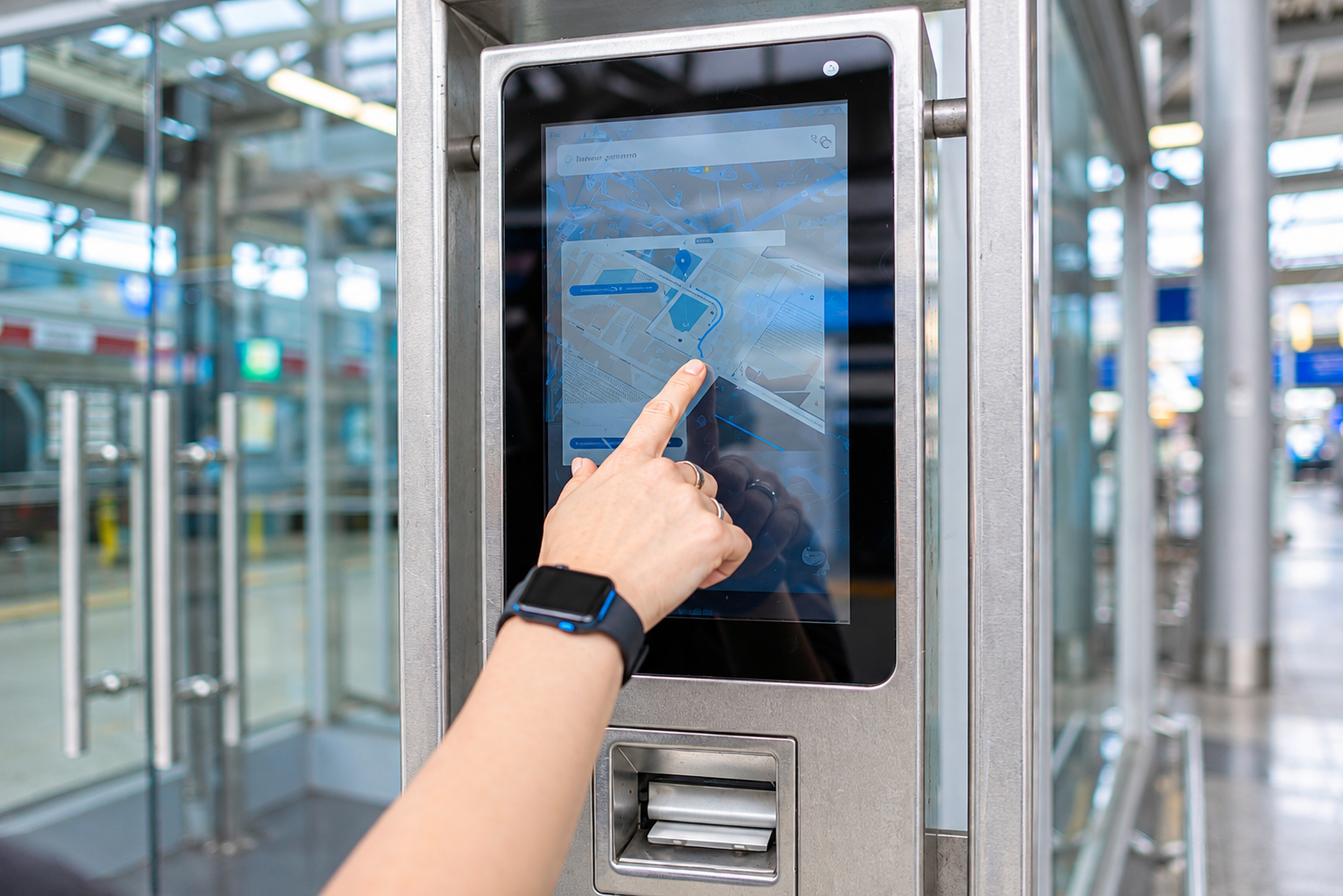
I. What Does "Open-Frame" Mean?
A standard monitor is a complete, standalone product, equipped with a front bezel, rear casing, stand, and base. An open-frame monitor, by contrast, leaves the "casing" to the device manufacturer. It consists only of a narrow-bezel front face, an LCD panel, a touch layer, and a black metal back cover, with mounting tabs positioned around the perimeter. Essentially, it functions as a "module" that can be bolted directly into a sheet-metal enclosure. The result: the device manufacturer retains full control over the external design, while the screen serves exclusively as an interface for display and touch interaction.
II. The Value of Narrow Bezels and Flush Fronts
Narrow bezels allow for smaller cutouts, resulting in a cleaner, more streamlined appearance on the device’s front. A flush, flat front face eliminates crevices where liquids or dust might accumulate, making it easy to clean with a simple wipe. If the front bezel meets the IP65 standard, the screen itself provides the necessary seal—eliminating the need for the manufacturer to engineer a separate waterproof structure for the touch area. Furthermore, with an IK08 impact-resistance rating, the screen can withstand the bumps, knocks, or accidental impacts from objects like luggage—or even physical blows—common in public environments.
III. Four Common Pitfalls During Integration
① Heat Dissipation: Adequate space for airflow must be left behind the screen. If the ventilation path is blocked by sheet metal, the unit may trigger thermal protection and go black during hot weather.
② Cutout Tolerances: A discrepancy of even 1mm from the technical drawings can force assembly workers to use excessive, damaging force, potentially cracking the panel.
③ Misconceptions About Waterproofing: An IP65 rating applies only to the screen itself; other seams and joints in the device enclosure must still be sealed separately.
④ Cable Stress: Improper cable routing or tension can lead to connection failures or damage. In cramped enclosures, HDMI and USB cables can suffer from poor contact after being subjected to sharp bends and prolonged vibration; therefore, cabling should be routed with a gentle curve and properly secured.
IV. The Crucial Specifications
Available in sizes ranging from 7 to 32 inches, with both 16:9 and 4:3 aspect ratios; resolutions span from 1024×600 to 1920×1080. Touch technology options include 10-point capacitive or multi-point infrared. Brightness levels can be selected based on indoor or semi-outdoor environments. Connectivity includes HDMI, VGA, DVI, and USB (for touch). Power options feature 12V or wide-range voltage input. The units support VESA 75×75 mounting and operate within a temperature range of -10°C to 60°C. With low overall power consumption, they are well-suited for long-term, continuous operation in unattended equipment.
V. An Often-Overlooked Metric: Supply Lifecycle
A vending machine typically has a lifespan of five to eight years. While the products (such as beverage flavors) can be changed, the display model cannot be replaced annually. For system integrators, questions like "How long will this display remain available?" and "Will the firmware or interfaces change during the product's lifecycle?" are far more critical than an extra 100 nits of brightness. A long product lifecycle and a stable supply chain constitute the true competitive moat for open-frame displays.
The LMENGER 2S series of open-frame touch displays covers sizes from 7 to 32 inches. They feature an IP65-rated front panel with IK08 impact resistance, a flush-front, narrow-bezel design, and support for both VESA and flush-mount (embedded) installation. Having passed EMC interference testing, they are ideal for long-term deployments in self-service terminals, vending machines, and industrial all-in-one systems.