
From Traditional HMI to Intelligent HMI: Why Touch Interaction Matters in the Age of AI
AI is only as good as the interface that delivers it.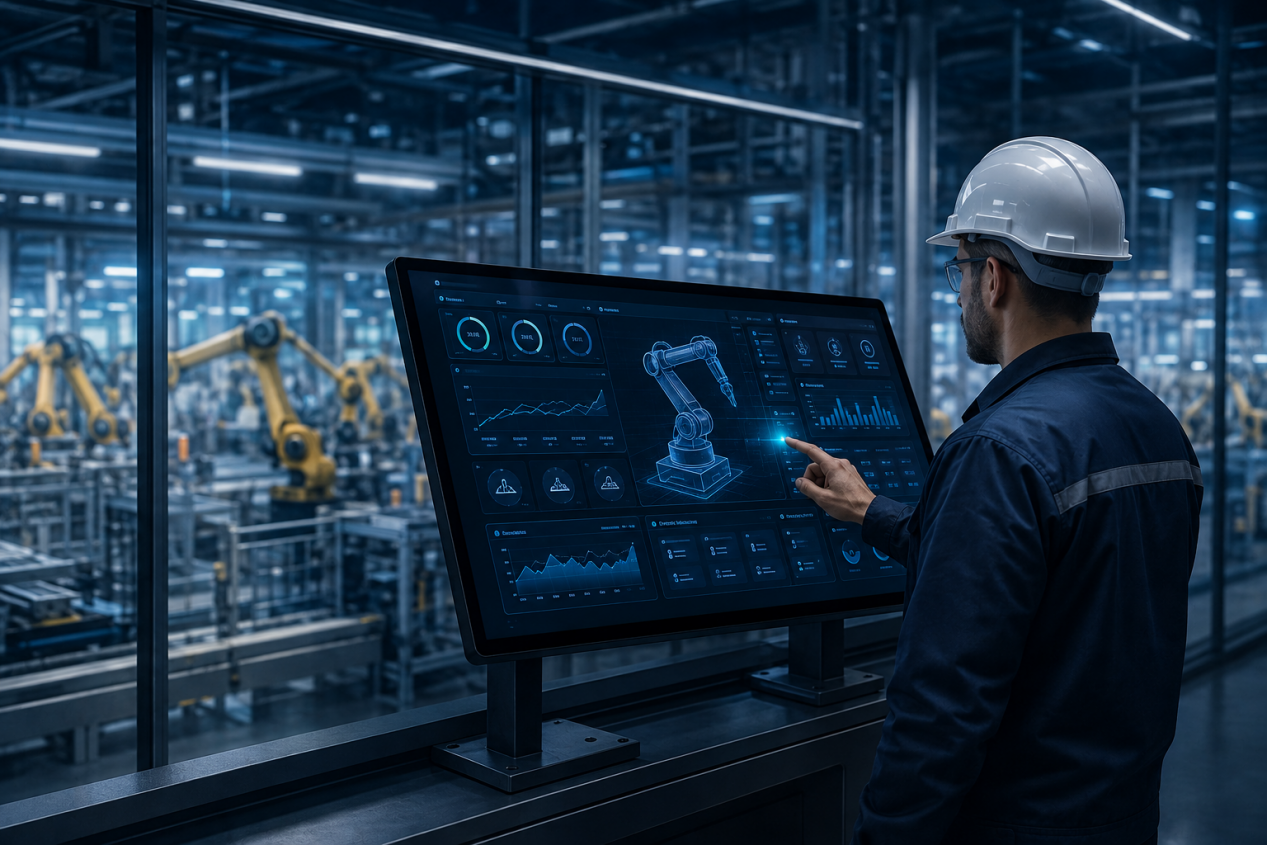
By 2026, Industrial AI and edge computing are shop-floor realities. Machines stream data by the second—temperature, vibration, yield, status.But many factories overlook a critical bottleneck: that intelligence has to reach the operator through something. What if that something hasn't changed in 15 years?
If the HMI still relies on physical buttons and monochrome displays, AI-generated warnings become noise. Operators can't see them in time. Can't act quickly.
AI's value gets stuck at the interface.
What AI Demands from HMI
Traditional HMI does one thing well: information display.
AI-enabled HMI must do more. When AI detects an anomaly, operators need three answers instantly:
What's happening? – Alerts visible at a glance.
Why? – Key evidence visualized to build trust.
What to do? – Clear action steps, one-tap confirm.
Traditional HMI is a dashboard. Intelligent HMI is a co-pilot. It interprets data and guides action.
Why Touchscreen HMI
Touchscreens offer flexibility that fixed button panels cannot. The same display adapts to context—normal dashboard, alarm view with countermeasures, maintenance mode with repair guides.
Operators tap, swipe, confirm. No memorized key sequences. Buttons are static; AI outputs are dynamic. Touch fits.
Infrared Touch Frames Matter Too
Large-format monitors now display AI analytics and OEE dashboards across factory floors. But view-only screens force operators to walk back to their stations for details or alarm acknowledgment. That gap costs time.
Infrared touch frames add interactivity to existing displays. Operators tap a machine, drill into data, acknowledge alerts—on the spot.
See → Walk → Act becomes See → Act. Those seconds matter.
The Bigger Shift
AI won't replace operators. It will change their role. As automation handles repetition, people focus on monitoring, judgment, exceptions.
The HMI is no longer a control panel. It's a dialogue interface between humans and intelligent systems. The question is no longer "how many parameters can we show?" It's "can the operator make the right call faster?"
AI in the factory needs more than algorithms. It needs an interface that lets operators see clearly, reach easily, respond quickly.
Touchscreen HMI—integrated displays or infrared frames added to existing screens—is an essential link in that chain. Not optional. Essential.


